
Steve Binger of ColorTrends Painting has 30+ years of hands-on experience with cabinet refinishing in Springfield, Missouri, and that experience matters, because this trade demands far more than standard wall painting skills. Knowing what to look for in a cabinet painter protects your investment and makes sure you hire a craftsman who understands the chemistry and mechanics of cabinetry, not just the color. Cabinet surfaces take constant friction, moisture, and grease that would ruin ordinary interior paint. Evaluating a contractor for this work takes specific technical knowledge, not just general trust.
Why Cabinet Refinishing Requires Specialized Experience
Cabinet refinishing is furniture manufacturing performed inside an occupied home. It takes a grasp of substrates and coatings that general painters rarely have. You need someone who knows that maple, oak, MDF, and thermofoil each demand different prep and different primer systems to get lasting adhesion.
Steve Binger of ColorTrends Painting has seen cabinet refinishing fail most often for two reasons: inadequate grease removal and the wrong primer choice, not paint quality alone. A contractor who treats your kitchen cabinets like bedroom walls will hand you a finish that chips within months of normal use.
General painting experience doesn’t translate automatically to cabinetry. The tolerances are tighter, and bad prep shows up fast. A real specialist understands how wood grain raises with water-based products, how tannins bleed through weak blockers, and how humidity slows curing in a house people are still living in. If you’re still weighing your options, understanding the differences between staining versus painting kitchen cabinets helps clarify which path suits your existing woodwork before you start vetting contractors.
Evaluating Sprayed vs Brushed Cabinet Finish Quality
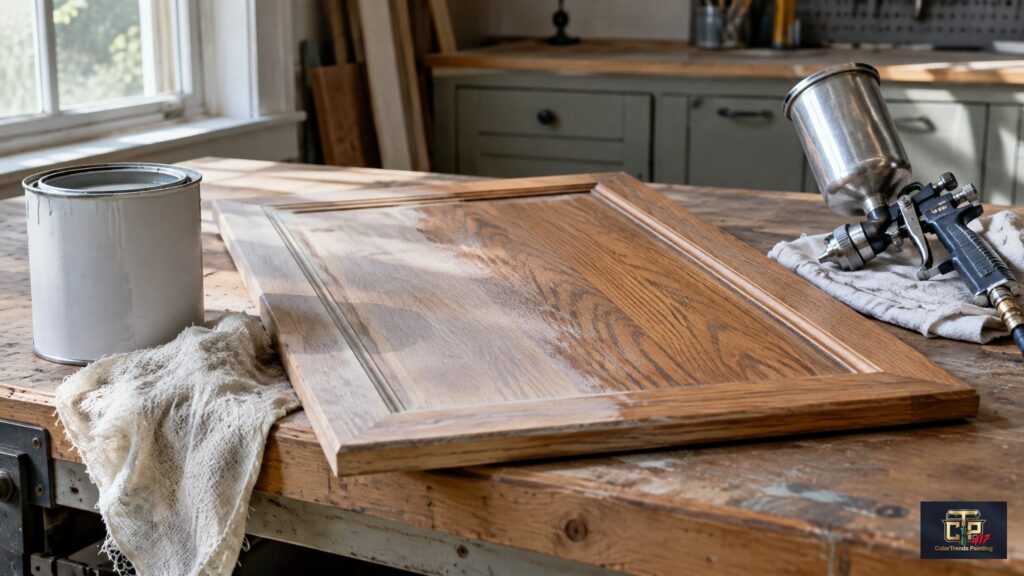
The application method decides whether your cabinets look professionally restored or obviously painted, and it says a lot about a contractor’s standards. A factory-like sprayed finish needs HVLP equipment, proper viscosity reduction, and controlled environment conditions that general painters rarely maintain on a residential jobsite. Brushed applications leave stroke marks and uneven build-up on detailed molding. Spraying atomizes the coating into a uniform film that mimics the original manufacturer finish.
Identifying Factory-Like Smoothness
Inspect sample doors in person rather than trusting portfolio photos. Cameras flatten texture and hide orange peel that becomes obvious under kitchen lighting. Run your fingertips across recessed panels and inside edges, where brush marks typically show up, and feel whether the surface is smooth or ridged.
Professional cabinet painters change their coating system to match the substrate: bonding primers for thermofoil, oil-based blockers for tannin-rich oak, catalyzed lacquers for high-use kitchens. That material-specific approach is what makes a finish feel like part of the wood instead of a plastic shell sitting on top of it.
Questions About Application Equipment
Ask directly what spray system the contractor uses, and whether they thin materials properly or just run an airless pump built for walls through a cabinet job. Understanding sprayer versus roller application differences helps you see why equipment choice matters for a professional result on cabinetry. Contractors committed to sprayed finishes invest in dedicated spray booths or build contained, ventilated spaces with dust control. Contractors who brush or roll usually work in open conditions that invite contamination.
Preparation Standards That Prevent Peeling and Chipping
Adhesion failures almost always trace back to a skipped or rushed prep step, which makes prep the best indicator of how long a finish will last. As Steve Binger of ColorTrends Painting puts it, cabinet refinishing fails most often from inadequate grease removal and the wrong primer, not the paint itself. Cleaning has to go past a surface wipe-down. It needs chemical degreasers that dissolve cooking oils that have soaked into the wood pores over decades.
Cleaning, Deglossing, and Priming Protocols
Proper prep includes mechanical sanding or liquid deglosser to strip factory sealants and leave a surface primer can actually grip. Bonding primers made for slick surfaces need to replace generic all-purpose products on laminate, thermofoil, or previously varnished wood. Tannin-blocking primers stop knot bleed-through on oak and cherry, and flexible primers move with the wood instead of cracking at the joints and rails. Skip any of these steps and the finish will fail early, no matter how good it looks on day one.
Protecting Hardware and Surrounding Surfaces
Quality refinishing means pulling doors, drawers, and hardware off completely rather than masking around hinges and handles in place. Floors, countertops, and appliances get covered well beyond the immediate work area, to catch overspray and drips during application. Reviewing a home preparation checklist for painters shows what homeowners should handle beforehand, so the contractor can focus entirely on prep and protection. A contractor who promises a quick turnaround by leaving hardware attached or skimping on masking is telling you speed matters more to them than the finish.
Essential Questions to Ask a Cabinet Painter During Estimates
The estimate conversation tells you whether a contractor refined their process over years of specialized work, or just added cabinetry to a general service list. Ask which primer and topcoat brands they use for your cabinet type, and whether they adjust formulas based on the existing finish and wood species. Ask for the exact number of coats in the scope, and whether extra coats cost more or are already built into the price.
Coating Systems and Material Compatibility
Professional cabinet painters match the coating system to the substrate: bonding primers for thermofoil, oil-based blockers for tannin-rich oak, catalyzed lacquers for high-use kitchens. Ask whether they use single-component paints that cure by evaporation, or two-component systems that chemically crosslink for more hardness and chemical resistance. Ask about sheen consistency across doors, frames, and filler strips, mismatched gloss usually means inconsistent product batches or inconsistent technique. These details separate a contractor who engineers a durable finish from one who buys whatever’s discounted at the supply house that week.
Project Timeline and Curing Expectations
Dry time and cure time are not the same thing, and mixing them up is how homeowners damage a new finish by reinstalling hardware or loading shelves too soon. Most cabinet coatings are touch-dry within hours but need days or weeks to reach full chemical resistance and hardness. Ask for a written schedule that says when doors come back, when light use is safe, and when the finish is fully cured. Understanding cabinet refinishing cost expectations in Springfield alongside the timeline helps you tell a thorough process from a rushed one.
Understanding Cabinet Painting Warranty Coverage
A warranty document shows you what a contractor actually believes about their own work. Read it before you sign anything. Real coverage addresses adhesion failure, chipping under normal household use, and color fading from UV exposure or cleaning chemicals.
ColorTrends Painting backs its work with written warranty coverage, which reflects how the owner-led prep and application standards hold up on jobs across Springfield, Nixa, and Ozark. Review our cabinet painting warranty details to see exactly what protections apply to your project.
A warranty should spell out what it excludes: homeowner neglect, moisture problems unrelated to the coating, modifications made after the job is done. Vague language promising to “fix problems” without defining a warrantable defect leaves you depending on goodwill instead of a contract. A reputable contractor spells out response timelines and remedy procedures, so you know what happens if something goes wrong months or years later. A warranty that covers nothing specific protects the contractor, not you.
Red Flags in Portfolios and Contractor Communication
Portfolio photos only tell part of the story. Look past the staged shots for warning signs of inconsistent quality. Distant shots that never show close-up texture, edge detail, or inside corners often hide brush marks, overspray, and sloppy masking lines. Inconsistent sheen across door fronts and face frames in the same photo points to batch mixing problems or uneven technique. A contractor confident in their work shows you macro-level detail shots, because the finish holds up under scrutiny.
Spotting Inconsistent Results in Past Work
Look at projects from different time periods to see whether quality stays consistent or swings with crew assignment and season. Before-and-after photos should use the same lighting and distance so you can honestly compare the transformation. Check the grout lines, appliance gaps, and floor transitions, where sloppy masking leaves a visible boundary between new and old. If a portfolio never shows glass inserts, wire mesh, or ornate molding, that contractor may not have much experience with complex cabinetry.
Vague Contracts and Missing Details
A written scope should name the exact products, coat counts, prep methods, and protection measures, not lean on phrases like “professional grade materials” or “standard preparation.” A contractor who won’t put these details in writing is asking you to trust verbal promises that become unenforceable once you’ve paid. Pressure to skip prep steps, cut coat counts, or accept substitutions mid-project tells you someone is protecting their margin, not your outcome. Communication gaps during the estimate usually predict worse communication during the job, right when problems and accountability matter most.
Next Steps for Springfield Homeowners Ready to Refinish
An owner-led estimate means Steve Binger personally looks at your cabinet condition, substrate, and existing finish, instead of sending out a salesperson to do it for him. Family-owned ColorTrends Painting serves Springfield, Nixa, Ozark, Republic, Willard, Clever, Highlandville, Branson, and Battlefield, built on three decades of local experience. Every estimate comes with a detailed written scope, product specs, and a realistic timeline, so you can decide without pressure. Contact us today to talk through your cabinet refinishing project with the owner who’ll oversee the work from start to finish.
Frequently Asked Questions About Cabinet Refinishing
What do most homeowners regret about painting their cabinets?
Most regrets stem from hiring contractors who skipped proper degreasing and bonding primer steps, leading to peeling within months of normal kitchen use. Homeowners also frequently underestimate cure time, damaging fresh finishes by reinstalling hardware or loading shelves before chemical crosslinking completes. Choosing price over specialized cabinet experience typically costs more in rework than doing it correctly initially.
How can I verify a painter actually specializes in cabinets?
Ask which specific primers they use for your cabinet substrate and whether they adjust coating systems for thermofoil, oak, or laminate versus treating all surfaces identically. Request to inspect physical sample doors rather than portfolio photos, checking inside edges and recessed panels for brush marks or texture inconsistencies. Specialists discuss HVLP spray equipment, viscosity reduction, and environmental controls; generalists typically cannot address these technical details.
What is the 1/3 rule for deciding whether to paint cabinets?
The 1/3 rule suggests refinishing makes sense when cabinet boxes are structurally sound and replacement would cost three times more than professional refinishing. If box construction is damaged, layout needs reconfiguration, or door styles are permanently outdated, replacement may offer better long-term value despite higher upfront cost. This guideline helps homeowners avoid investing in refinishing when underlying conditions make replacement the wiser financial decision.
What factors determine fair pricing for professional cabinet painting?
Legitimate pricing reflects linear footage, door count, substrate complexity, prep requirements, and coating system specifications rather than flat per-door rates that ignore variable conditions. Thermofoil and laminate require specialized bonding primers, while tannin-rich oak demands multiple blocker coats, both adding labor and material costs beyond simple repainting. Quotes significantly below market average typically indicate skipped prep steps, inferior products, or inexperienced application that compromises longevity.