
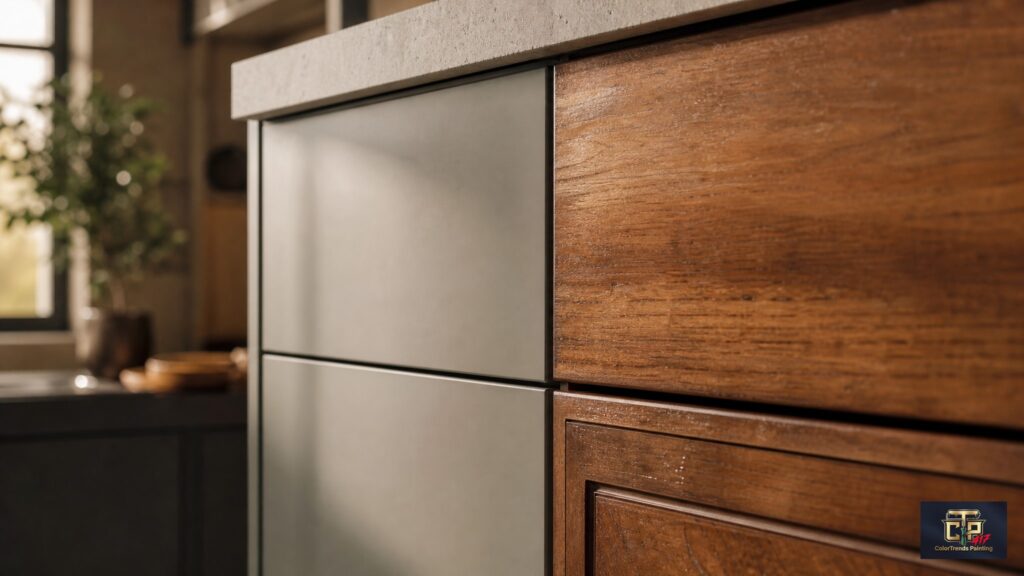
Steve Binger of ColorTrends Painting will tell you straight: durability depends more on proper prep and product quality than whether your cabinets are stained or painted. That distinction matters, because homeowners in Springfield, Nixa, and Ozark often pick a finish based on color alone, then find out later that their kitchen’s daily traffic demands something different. Staining vs painting kitchen cabinets isn’t just a look decision. It’s a functional one that decides how your space holds up against grease, moisture, and years of family life.
Family-owned ColorTrends Painting serves Springfield, Nixa, Ozark, and nearby communities, and every cabinet refinishing job comes with a 5-year warranty and premium materials. We’ve seen both finishes succeed and fail in local homes, and the difference almost always comes down to matching the right product to the right substrate and lifestyle. Get that match right and you avoid costly rework down the road.
Durability Differences Between Stained and Painted Cabinets
Your kitchen cabinets take more abuse than any other woodwork in your home. How each finish responds to that stress is what decides whether you’re happy in five years. Steve Binger of ColorTrends Painting is clear that neither option beats the other outright; the right choice matches how your household actually uses the space.
How paint finishes handle daily wear
Modern cabinet paints cure to a hard, non-porous shell that resists grease splatter and wipes clean without soaking in stains. That sealed surface makes painted cabinetry a good fit for busy cooking zones, where spaghetti sauce and oily fingerprints happen daily. Scrub these surfaces with mild detergent and you won’t lift the color or damage the wood underneath.
Paint shows its age differently than stain does.
When a painted cabinet chips or scratches, the damage exposes raw wood or primer underneath, and that high-contrast flaw demands attention fast. High-traffic spots around handles and drawer edges usually show wear first, especially if the original job skipped a proper bonding primer. The same hard surface that makes paint easy to clean also makes it brittle enough to crack on impact.
Why stain shows less damage over time
Stain soaks into the wood fiber instead of sitting on top of it, so minor dings and scratches blend into the grain instead of standing out as stark white lines. That forgiving quality suits households with young kids or pets who bump into lower doors regularly. Stain is translucent, so the wood’s own character hides imperfections that would ruin a painted finish.
That camouflage has limits many homeowners overlook.
Stain alone doesn’t protect against liquid spills or dishwasher steam, so a clear topcoat is mandatory in a kitchen. Skip that layer and water marks and oil spots soak in permanently, turning what should be low-maintenance beauty into an ongoing headache. The same logic applies when weighing wood staining vs painting for decks, where moisture exposure decides how much surface protection you actually need.
Maintenance Requirements for Busy Kitchens
Maintenance should drive your finish choice as much as color does. A gorgeous cabinet that demands more upkeep than your schedule allows will become a burden fast. Family-owned ColorTrends Painting advises matching maintenance to your household’s real rhythm, not the aspirational one you wish you had.
Cleaning routines for painted surfaces
Painted cabinets need gentle, non-abrasive cleaners to keep their sheen and avoid the micro-scratches that build into dull patches over time. Skip ammonia-based products and scouring pads; they degrade the topcoat and leave the surface open to staining. A soft cloth with diluted dish soap handles most kitchen messes without touching the finish.
You’ll need to touch up painted cabinets now and then to keep the look uniform.
Keep leftover paint stored properly for these repairs, because even slight batch variations show up as visible patches on large door fronts. Touch-ups work best applied before the damage spreads, since exposed wood absorbs moisture and swells in ways that make future adhesion tricky. Stay ahead of it and your painted finish lasts far longer than if you wait until the problem is obvious.
Upkeep needs for stained wood
Stained cabinets need periodic checks of the clear topcoat, to make sure it’s still intact and doing its job. Depending on how hard they’re used and how much sun they get, you may need to refresh that protective layer every few years to stop it drying or cracking. Oil-based topcoats amber slightly over time, which adds warmth but can shift the color away from what you originally picked.
Re-oiling or reapplying polyurethane happens less often than wiping down paint, but it’s a bigger job when it does.
That maintenance cycle suits homeowners who want deeper, richer tones and don’t mind occasional refinishing as the cost of owning natural wood. Skip that step and you get damage no amount of cleaning fixes, so be honest with yourself about whether you’ll actually keep up with it before you choose stain.
Visual Impact and Design Flexibility
Hands-on owner Steve Binger notes that design goals often decide between stain and paint more than practical concerns do. Your kitchen’s architectural style, lighting, and existing woodwork all shape which finish creates the cohesive look you’re after.
When stain enhances natural grain
Stain plays up the organic variation in wood, which is why it’s the natural pick for traditional, rustic, or craftsman-style homes common throughout the Ozarks. Open-grain species like oak and hickory develop depth under stain that paint would bury completely. If your home has exposed beams, hardwood floors, or other natural wood elements, stained cabinets tie the room together in a way that feels intentional, not renovated.
Natural light hits stained wood differently throughout the day.
Morning sun brings out warm undertones while evening shadows play up texture and grain, giving your kitchen a living quality that flat paint can’t match. That dynamic character appeals to homeowners who see their kitchen as a heritage space, not a trend showcase.
Achieving modern looks with paint
Paint gives you near-unlimited color choices, which is why it suits crisp, contemporary looks. Solid colors create clean sight lines and make small kitchens feel bigger by cutting out the visual noise of grain patterns. Two-tone schemes, with different colors on uppers and lowers, rely entirely on paint’s precision for sharp transitions.
Paint also fixes visual mismatches in kitchens where the existing cabinets were built from several wood species or grades. Instead of fighting mismatched grain with stain, paint pulls the whole kitchen into one deliberate look. That flexibility makes painting the practical call for renovations where budget rules out a full cabinet replacement.
Cost and Timeline Considerations in Springfield MO
Staining generally means fewer material steps and lower product costs than painting, though labor hours swing based on the existing cabinet’s condition. Painting calls for degreasing, sanding, priming, and multiple topcoats to get full coverage and durability, which stretches both the timeline and the material cost. For budgeting specific to your project, cabinet refinishing cost in Springfield gives you local numbers that national averages can’t.
Staining finishes faster for many homeowners in Nixa, Republic, and the surrounding area, because it skips the primer and multi-coat build that opaque paint needs. That speed advantage disappears, though, if your existing finish has to be stripped completely before restaining, since that adds real labor hours. Painting over previously stained cabinets also takes longer than painting over existing paint, because of the extra adhesion prep involved.
Experience is our best tool at ColorTrends Painting when we’re deciding whether your existing cabinets can take stain or need paint to look their best. We check substrate condition during the consultation, so you get an accurate timeline instead of an optimistic guess that falls apart once work starts. Local projects vary a lot based on past maintenance history, so a personal look at your kitchen beats a general rule every time.
Wood Type and Condition as Deciding Factors
Not every cabinet substrate takes stain well, and knowing that upfront saves you an expensive disappointment mid-project. The wood species and construction of your existing cabinetry often rules out one option entirely, no matter what you’d prefer to look at.
Best woods for staining
Open-grain hardwoods like oak, ash, and hickory absorb stain evenly and develop rich tonal variation that shows off their natural character. Tight-grain species such as maple and cherry take stain too, but they need preconditioning to avoid blotchiness, which adds a step, and cost. Quarter-sawn lumber shows ray fleck patterns under stain that plain-sawn boards don’t, so grain orientation is one more variable in how the final job looks.
Veneered cabinets bring their own challenges.
Thin veneer layers absorb stain unpredictably and sand through easily during prep, which risks damage you can’t undo. Many factory-finished veneers also carry sealants that resist stain penetration, so they need complete stripping before restaining is even possible. Because of that, some veneered cabinets are better candidates for paint, even though they’re real wood.
When painting covers imperfections
MDF, particleboard, and thermofoil cabinets can’t be stained successfully, because they lack the cellular structure that takes pigment. Paint is the only real option for these manufactured substrates, no matter how much you prefer the look of natural wood. Try to stain MDF and you get muddy, uneven color that peels within months.
Damaged veneers, water-stained panels, and heavily repaired surfaces also do better under paint’s opaque coverage. Rather than highlighting flaws the way stain would, paint gives you a fresh canvas that hides past damage completely. That’s what makes painting the practical fix for kitchens where a previous owner skipped maintenance or tried a DIY repair that didn’t hold.
Professional Application Matters More Than Finish Choice
Whether you choose stain or paint, adhesion fails without thorough degreasing, mechanical sanding, and the right bonding primers. Steve Binger of ColorTrends Painting delivers cabinet refinishing with premium materials and 5-year warranties, because lasting results start beneath the surface you can see. Skip the prep work and you’ve guaranteed premature failure, no matter how expensive the topcoat.
Prep work that prevents peeling
Kitchen cabinets build up invisible layers of cooking oils, furniture polish, and airborne grime that repel new finishes. The same logic behind how you’d prep walls before painting applies to cabinetry: degreasing with trisodium phosphate or a dedicated cabinet cleaner clears the barriers to adhesion. Sanding creates the mechanical tooth that lets the new finish grip, instead of sitting on a slick surface waiting to peel.
Rushing prep is the single most common cause of refinishing failure.
Each skipped step compounds the risk, because weak adhesion in one spot spreads stress to nearby sections as the wood expands and contracts with the seasons. Professional refinishers spend more time on prep than on the actual coating, because that ratio is what produces durable results. DIY jobs often flip that ratio, which is why they look great on day one and start falling apart within months.
Topcoat selection for longevity
Clear topcoats for stained cabinets and pigmented topcoats for painted cabinets need to match the chemistry of the layers underneath. Put a water-based product over an oil-based stain, or the reverse, and you get adhesion failures that show up as cloudiness, wrinkling, or peeling. Professional-grade catalyzed finishes cure harder and resist chemicals better than consumer versions, which is why they cost more and last longer.
Sheen level affects both looks and maintenance. Higher-gloss finishes resist staining better but show every surface flaw, while matte finishes hide flaws but soak up spills more readily. Picking the right sheen for how much visible wear your household can live with matters as much as picking the right chemistry. Our professional wood refinishing services walk you through these decisions, built on decades of local project experience.
Making the Right Choice for Your Home
The choice between staining and painting comes down to your lifestyle, your taste, and your existing cabinet substrate, not current trends or what your neighbor did. What works beautifully in a formal dining hutch can fail fast in a busy family kitchen, so an honest look at how you actually use the space matters more than magazine inspiration. Springfield homeowners trust ColorTrends Painting for guidance that puts long-term satisfaction ahead of quick fixes or fashionable choices that won’t last.
Schedule a consultation with Steve Binger to talk through your kitchen’s condition, your household’s traffic patterns, and how much upkeep you’re really willing to do, before you commit to either finish. Advice built on thirty-plus years of hands-on experience beats a generic online comparison every time, because your cabinets deserve a solution built for their reality, not a broad generalization.