
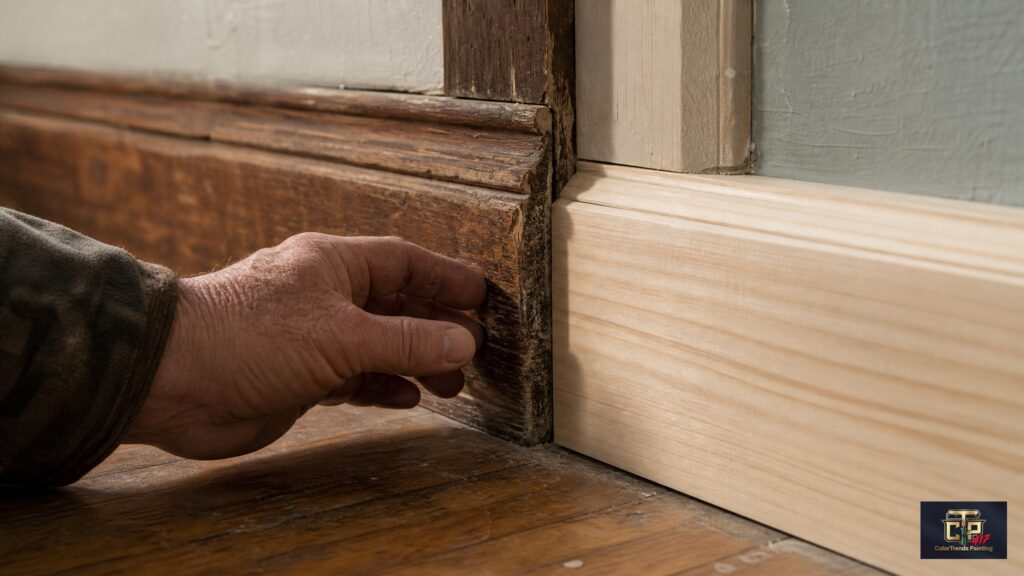
Steve Binger of ColorTrends Painting has spent over 30 years evaluating woodwork conditions in Springfield, Nixa, and Ozark homes. That kind of experience is what separates a costly mistake from a lasting investment when you’re deciding whether to restore or replace old trim. Some homeowners assume tired-looking molding has to go. Others try to save wood that’s already failed structurally. The right call depends on the actual condition of your wood, how it fits with your home’s architecture, and what you want out of the space long-term.
Steve Binger’s Rule: When to Restore Versus Replace Woodwork
Restoration keeps character intact and controls cost when the wood underneath is still sound. Replacement becomes necessary once rot, serious insect damage, or a modern update has already compromised the material. What you need is an honest look at historical value against practical durability, not a blanket rule to always save or always tear out. In older Ozarks homes, original quarter-sawn oak trim often outlasts modern pine replacements by decades once it’s properly stripped and refinished, and that alone makes preservation the smarter financial move in a lot of cases.
Replacement is the only real option once the substrate can no longer hold a fastener or take a finish that lasts more than a season. If the wood crumbles under light pressure, or there’s active moisture coming in from a leak nobody’s fixed, no surface treatment will stabilize it. That’s the framework: it keeps you from paying to refinish wood that’s going to fail again within months.
Assessing Structural Integrity Before Deciding on Trim Restoration
Surface wear rarely tells the whole story about whether trim can survive another generation. Paint that won’t hold usually signals a moisture problem underneath, and restoring the surface without fixing that source is a waste of time. Find the root cause first.
Identifying Rot, Insect Damage, and Moisture Failure
Rot usually starts at joints, end grains, or anywhere water sits against the wood for a while. Press a screwdriver gently into a suspect area. If it sinks in without resistance, or the fibers pull apart easily, the structure is already gone. Insect damage looks different, small exit holes, frass buildup, sections that sound hollow when you tap them. Moisture failure shows up as paint that keeps peeling, black staining under the finish, or swelling that reopens seams even after things dry out.
None of that is cosmetic. Filler and primer won’t fix it permanently.
Testing Fastener Holding Power in Old Molding
Old trim depends on its fasteners to stay plumb through seasonal movement. Pull-test a few nails or screws in an inconspicuous spot and see whether they still bite into solid wood, or come free with barely any effort. If a fastener spins loose or pulls out easily, the wood around it has lost density and won’t hold anything after stripping. This test catches deterioration a visual inspection misses, especially in baseboards near concrete slabs or window casings that see a lot of condensation.
Don’t commit to a restoration budget until you’ve checked holding power across the whole run of trim.
Cost Factors for Restoring or Replacing Old Woodwork
Budget decisions here come down to labor versus material availability in the Springfield area. Restoration typically runs about 70% labor and 30% materials. Replacement flips that ratio when the job needs custom milling to match a historic profile. Stripping several layers of lead-safe paint, repairing damaged sections, and sanding down to a smooth finish takes skilled hours that add up fast. New material, meanwhile, gets expensive when standard lumberyard stock can’t replicate the original dimensions.
Labor Intensity of Stripping and Repairing Original Trim
Chemical stripping, heat gun work, and hand scraping take patience, plus containment to keep hazardous dust out of the rest of your home. Every chipped corner, gouge, or missing section adds time before finishing even starts. That labor makes sense when the existing wood has grain quality or species character that new material can’t match. It’s a harder case to justify for common pine molding that’s already in bad shape. Professional wood refinishing services account for these variables upfront so you avoid change orders mid-project.
Material Availability for Historic Profile Matching
Standard big-box molding rarely matches a pre-1960s profile exactly, so you’re choosing between an imperfect substitute and custom fabrication. Custom millwork gets the shape right but comes with setup fees and minimum order quantities that push per-linear-foot cost well above restoration labor. When the original profile is still available through a salvage yard or specialty supplier, replacement can compete with restoration pricing. When it isn’t, preserving what’s there is usually the better value, unless the material is too far gone to save.
Aesthetic Value of Original Woodwork in Missouri Homes
Original trim adds warmth and resale value that new MDF or finger-joint pine doesn’t replicate, especially in the older neighborhoods around Nixa and Republic. Buyers notice real craftsmanship and pay more for homes that keep their architectural character instead of swapping it out for generic builder-grade material. And when replacement trim doesn’t match the scale and proportion of the original architecture, it hurts curb appeal and the flow of the interior at the same time.
Preserving Patina and Grain Character
Decades of oxidation and wear build depth into natural wood that a factory-applied stain can’t fake. Old-growth timber has tight growth rings that produce a figure pattern you won’t find in fast-grown plantation lumber, and it gives restored pieces a richness that photographs don’t do justice to but looks great in person. That patina represents time and place in a way new material can’t manufacture, whatever the species or finish quality. If you value authenticity over uniformity, that’s what justifies the extra labor.
Matching New Millwork to Existing Architectural Styles
When partial replacement can’t be avoided, matching the profile is only the first step. Species, grain orientation, and finish sheen all need to line up with the adjacent original work, or you end up with a patchwork look. Even a small difference in reveal depth or corner radius catches the eye and drags down the perceived quality of the whole installation. That’s the same matching challenge that makes staining versus painting kitchen cabinets worth thinking through carefully before you commit to either approach.
Modern Alternatives When Replacement Is Necessary
Not every job favors saving the original material, and knowing when to switch to a modern alternative keeps you from repeating the same failure twice. Bathroom vanities, exterior fascia, and porch ceilings all see moisture levels that beat traditional wood no matter how well you maintain it. Picking the right substitute for those high-exposure spots extends service life without giving up the traditional look your home calls for.
Choosing Durable Materials for High-Moisture Areas
PVC trim boards and cellular composites resist rot, swelling, and insect damage, and they take paint the same way wood does. They cost more per linear foot than pine, but they eliminate the repair cycle you’d otherwise get in a wet location where wood fails on a predictable schedule. Exterior work benefits a lot from that stability, which is why it’s worth understanding exterior wood staining versus painting when you’re planning deck or siding work alongside trim replacement.
A moisture-resistant substrate solves a problem no finish system can prevent forever.
Paint-Grade Options That Mimic Traditional Profiles
Primed finger-joint pine sits in the middle, between raw lumber cost and synthetic durability, for interior work. Factory priming seals end grains and knots that would otherwise bleed through a field-applied primer, giving you a better base for the topcoat. Pre-primed stock also takes a professional finish better than raw lumber, because the primer penetrates evenly across joint lines and face surfaces alike. That consistency cuts callback risk and gets you a smoother result in fewer coats, which offsets the extra material cost through savings on labor.
Professional Prep Work Determines Long-Term Success
Prep work is what actually separates a lasting result from a failed one, whether you restore or replace. ColorTrends Painting backs trim and cabinet work with 5-year warranties, because the right prep and material selection are what prevent premature failure, no topcoat can make up for skipping that step. Prep takes up more of the project timeline than most homeowners expect, and cutting corners there guarantees an early failure no matter how good the product or the application.
That’s part of why Steve stays hands-on through every phase of a job. Proper wall and trim preparation means cleaning, degreasing, filling, sanding, and priming in a sequence built around the specific substrate and finish system. Rush any of those steps and you compromise adhesion, which brings callbacks that cost trust as much as money. Learning correct interior trim painting techniques helps DIY homeowners see why professionals take prep so seriously.
Making the Final Call With a Trusted Local Expert
Guessing on whether to restore or replace old woodwork risks two outcomes: money wasted on a doomed restoration, or demolition of trim that could have been saved. An honest assessment from someone who’s evaluated hundreds of Ozarks homes gives you clarity that online research can’t. Steve Binger personally handles estimates and consultations, because judgment built on 30 years of experience isn’t something a standardized checklist can replace.
Schedule a no-pressure woodwork assessment to find out whether your trim and cabinets should be restored or replaced, based on the actual condition of your home. The conversation costs nothing, and it clears up the uncertainty before any work begins.