
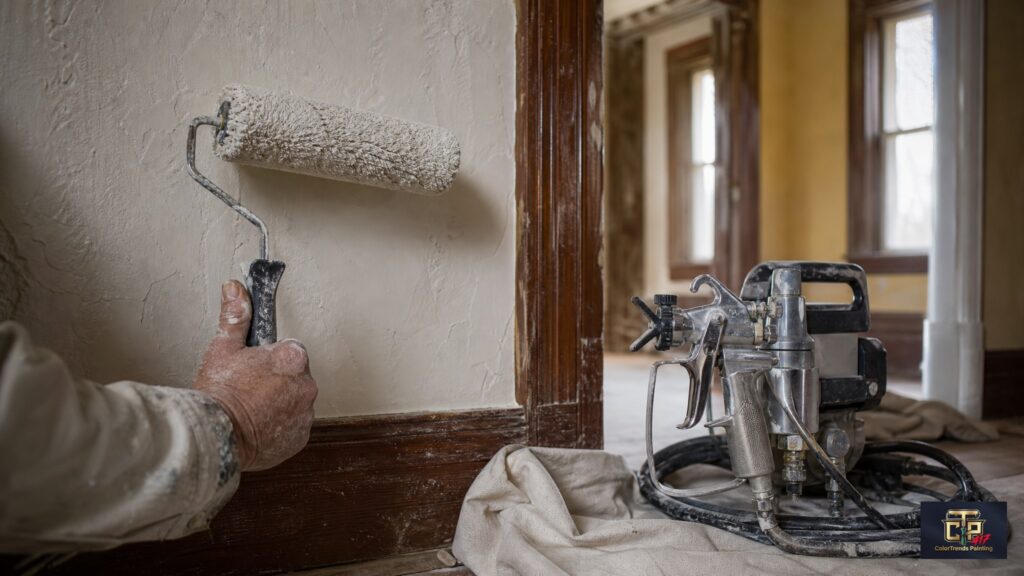
Steve Binger of ColorTrends Painting brings over 30 years of hands-on painting experience to every estimate and jobsite in Springfield, MO, and that field time shapes how we advise homeowners tackling their own projects. The choice between a paint sprayer and a roller isn’t about which tool is faster in a vacuum. It’s about which one matches your skill level, your project, and how much prep work you’re willing to do. Experience is our best tool, and that principle is exactly what prevents costly rework when you’re trying to save money by doing it yourself.
Pick the wrong application method and you end up with wasted material, a sore back, and a finish that looks amateurish no matter how hard you tried. You need honest guidance that weighs the reality of residential painting against the polished promises on the side of the equipment box.
Why Tool Choice Matters for Springfield DIYers
Family-owned ColorTrends Painting serves Springfield, Nixa, Ozark, and surrounding communities with owner-led estimates and jobsite work, so we see exactly where local homeowners succeed and where they struggle with their equipment. Your home’s age, wall texture, and layout matter more than generic online advice suggests when you’re weighing spraying against rolling. A sprayer might conquer a new-build open concept in a few hours. That same tool becomes a liability in a historic Nixa bungalow with original trim and settled plaster.
You deserve advice grounded in local reality, not national averages.
The right choice protects your investment and your weekend. The wrong one turns a simple refresh into a week-long remediation project, because what works on a contractor’s schedule often fails on a homeowner’s timeline.
When Rolling Walls Is the Smarter DIY Option
Rolling is the most forgiving method for residential interiors, where precision matters more than raw speed. You stay in constant contact with the surface, which builds muscle memory and cuts your odds of a visible mistake in a living space.
Best Interior Projects for Rollers
Single-room repaints, accent walls, and spaces with a lot of trim detail favor rollers. Setup stays minimal and cleanup takes minutes instead of hours. Textured walls, common in Ozarks construction, actually benefit from the mechanical pressure of a roller nap, which pushes paint into crevices that spray mist might just bridge over without ever really sticking. If you want to paint interior walls like a pro, mastering roller technique gives you skills you’ll reuse on every future touch-up.
Common Roller Mistakes to Avoid
Overload the roller cover and you get drips and uneven texture that dry into visible lap marks, especially under natural light. Skip the cut-in step, or reach for a worn-out cover, and you get a stipple pattern that screams amateur no matter how expensive the paint was. Most failures trace back to rushing the loading process or ignoring the coverage rate printed right on the can.
Spraying vs Rolling Walls for Exterior and Large Surfaces
Exterior siding, fences, and big open floor plans run on different math. The setup cost of spraying pays for itself once you’re covering enough square footage. Uniformity matters outdoors, because sunlight exposes every inconsistency, and a steady spray pattern covers rough surfaces in a way rollers can’t match.
When Speed Justifies the Setup
Large unbroken surfaces like garage doors, privacy fences, or new drywall in an unfinished basement let you use a sprayer’s speed without drowning in masking tape. The tipping point comes when the area is bigger than you can comfortably roll in one session without fatigue wrecking your technique. Knowing the best time to paint house exterior in Missouri helps you line up your spray day with a weather window, so you’re not fighting flash drying or trapped moisture.
Managing Overspray in Residential Areas
Wind carries atomized paint onto neighboring cars, windows, and landscaping no matter how carefully you aim, so calm mornings are essential for exterior work. Dense neighborhoods in Battlefield or Fremont Hills need drop cloths that extend well past the work zone, plus a heads-up to the neighbors. For smaller exterior jobs, that containment burden often erases the speed advantage entirely, and brushing and rolling would have been just as fast and a lot safer.
Renting a Paint Sprayer: What You Need to Know
Renting a sprayer looks economical until you factor in the learning curve, the cleanup, and the gap between a consumer rental and a professional rig. Big-box units lack the pressure stability and tip variety that make for a smooth finish, so beginners spend the day fighting orange peel and streaks.
Equipment Limits for Weekend Warriors
Rental machines wear out from heavy use and inconsistent maintenance, so your unit might perform poorly through no fault of your own. Tip selection at the rental counter rarely matches your paint’s viscosity, which forces compromises that show up as spatter or thin coverage. Pile those limitations on top of someone already nervous about damaging their own home, and you get a feedback loop of hesitation and poor results.
Hidden Costs of Rental Units
Cleaning fees, damage waivers, and mandatory supply purchases add up fast, sometimes close to the cost of just hiring help for a small job. Time spent fighting clogs or adjusting pressure eats into your productive hours and stretches the project past your planned weekend. Plenty of renters bring the machine back frustrated, still stuck fixing spots it never handled right.
DIY Painting Equipment Tips for Professional Results
Matching your tools to the paint’s chemistry matters more than brand loyalty or price point if you want a finish that lasts. Professional results come from respecting the relationship between surface, product, and application method, not from hoping better gear will cover for skipped steps.
Matching Nap Size and Tip Size to Paint Type
Thicker paints need longer naps or larger spray tips to lay down enough material without overworking the surface. Flat sheens hide minor flaws better than satin or semi-gloss, which telegraph every inconsistency in nap length or spray distance. Check the paint can’s technical data sheet for the recommended mil thickness and set your tool to match it. Don’t guess based on what worked on the last job.
Prep Work That Makes or Breaks the Finish
No application method saves a poorly prepped surface. Spraying actually makes defects worse, because the mist settles into every imperfection instead of filling it. Learning how to prep walls before painting heads off the adhesion failures that peel within months, whether you sprayed or rolled. Cleaning, caulking, priming, and sanding eat up more time than the actual painting does, and accepting that ratio is what separates a finish that lasts from one that disappoints you by spring.
This prep phase isn’t optional, and it’s identical no matter which tool you pick up.
Avoiding Costly Mistakes with Expert Coaching
The We Help U PAINT coaching service gives DIY homeowners personalized guidance so they get professional results without paying full contractor costs. Real-time problem solving stops wasted gallons and botched finishes before they happen, which costs a lot less than fixing them after the fact.
Signs You Need Guidance Before Starting
If you’re unsure about surface compatibility, color selection, or the order you should tackle things in, that’s a sign you’d benefit from expert eyes before you crack open the first can. Past failures, anxiety about damaging a surface you care about, or conflicting advice from three different websites all point to gaps that a generic tutorial won’t fill. Catching these signs early saves money, and it saves your enthusiasm for the project too.
How We Help U PAINT Bridges the Gap
Personalized coaching deals with your home, your materials, and your skill level instead of offering platitudes that may not even apply to your situation. Finding a DIY painting coach near me connects you with local expertise that already knows the quirks of Ozarks construction and the local climate. That kind of targeted support turns an overwhelming project into a manageable one, and you come out the other side with both confidence and a nice-looking wall.
Making Your Final Decision with Confidence
Your honest read on your available time, your physical stamina, and how much attention to detail you’re willing to put in should drive this choice more than any slick video or sales pitch. Sprayers reward meticulous planners working large, simple surfaces, while rollers forgive interruptions and suit a detailed interior better. Neither tool guarantees success without real preparation and a realistic sense of the learning curve ahead.
If you’re still unsure after weighing all this, a coaching consultation gives you clarity without committing you to full-service pricing. Steve Binger’s crew has seen enough projects go sideways and enough go right to tell you, honestly, which one you’re signing up for.
Frequently Asked Questions
What projects are better suited for rollers versus sprayers in homes?
Rollers excel at single-room interiors, textured walls, and spaces with extensive trim where control outweighs speed. Sprayers make sense for large unbroken exterior surfaces, fences, or open floor plans where uniformity justifies the extensive masking setup required.
What mistakes do DIYers commonly make with rented paint sprayers?
Most renters skip proper thinning and tip sizing, leading to spatter or insufficient coverage that requires rework. Many also underestimate cleaning time and overspray containment, turning a weekend project into a multi-day ordeal with damaged surroundings.
How does coaching prevent wasted materials and poor finishes?
Coaching identifies incompatible products, incorrect prep sequences, and tool mismatches before you purchase supplies or start applying paint. This targeted guidance catches expensive errors during planning rather than after gallons have been wasted on unsalvageable results.
What prep steps are non-negotiable for both spraying and rolling?
Thorough cleaning, caulking gaps, spot priming bare areas, and sanding glossy surfaces must happen regardless of application method. Skipping any of these steps causes adhesion failure that peels or chips within months, wasting all subsequent effort.
When should I hire a pro instead of attempting DIY painting?
Hire a professional when working at unsafe heights, dealing with lead paint, or facing complex substrates like stucco or previously failed coatings. Also consider hiring if your timeline is fixed, your budget cannot absorb rework, or your physical limitations make sustained overhead work risky.