
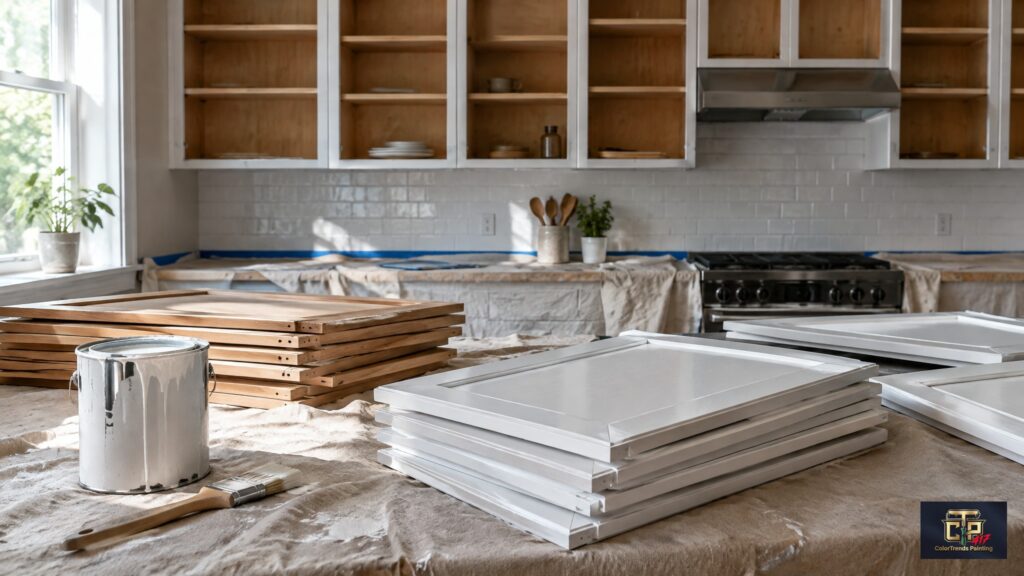
You want a kitchen that looks new, and you want to know how many days the cabinets will be in your way. Both are fair questions, and the answer starts with how paint actually dries.
How long cabinet painting takes for most kitchens
Steve Binger of ColorTrends Painting is a Springfield, MO painter with more than 30 years of hands-on experience, and he plans a cabinet job around the product, not the clock. A full kitchen is a multi-day job, and the calendar runs longer than the hands-on hours because drying and curing set the pace.
A single door can be quick. Rushing a whole kitchen into one day is where the trouble starts, because drips, tacky spots, and chips tend to show up weeks later.
If you’re weighing this against a bigger project, here is how long a whole-house interior paint job takes for comparison. Cabinets surprise people because they have far less surface than a house but need far more patience between steps.
This article can’t hand you an exact day count for your kitchen. That depends on the factors below, and a firm number only comes after someone has looked at your doors, your finish, and your layout.
What changes the timeline, up or down
Five things move the schedule: how many doors and drawers you have, the profile of those doors, the condition of the old finish, the product and number of coats, and the air in your house. Some are countable. Others you only learn by looking.
Door count and profile: where the hours add up
Start by counting every door and drawer front. Each one gets cleaned, sanded, primed, and painted on both sides, so the totals matter more than the square footage of the room.
Profile matters just as much. Raised panels and routed edges add handling and brush or spray time per piece, because paint has to reach every groove without pooling. Flat slab doors move faster.
Two kitchens with the same footprint can land days apart. A galley kitchen with forty shaker-style fronts will take longer than a larger one with simple slab doors.
Old finish, product choice, and Missouri humidity
The old finish decides how much prep you’re facing. Glossy factory coatings, years of cooking grease around the stove, and worn or peeling spots each add time before any paint goes on.
The product sets the waiting game. Every coating has its own dry and cure times, and a tougher cabinet-grade finish may ask for more patience than a quick-drying one.
Then there’s the weather inside your house. Missouri humidity in summer slows drying, and cold, dry winter air can do its own damage to a cure. If your project falls in the colder months, read up on painting indoors in winter before you pick dates, because room temperature and humidity change how long each coat needs.
Where the days go: prep, coats, and drying
Think of the job as a sequence, and think of the paint as one short step inside it. Here is the standard order:
- Protect floors and counters.
- Remove and label doors, drawers, and hardware.
- Clean and degrease.
- Scuff-sand.
- Repair dings, holes, and worn spots.
- Prime.
- Paint, letting each coat dry.
- Rehang doors and reinstall hardware.
Steve can confirm his exact order and door-handling method when he walks your kitchen.
Prep takes longer than the paint itself
Prep is the focus ColorTrends is known for, and it takes longer than the paint. Cabinets near the stove carry a film of cooking grease you can’t always see, and paint won’t hold to it.
Skipped prep is a common reason a finish chips or peels early. A finish that looks great on day three can fail by spring if the surface underneath was dirty or glossy.
You can’t see prep in the finished kitchen, which is exactly why it’s the first thing to ask about.
Coats, recoat windows, and sanding between coats
Each coat waits on the product’s recoat window, which the manufacturer publishes on the data sheet. That window moves with room temperature and humidity, so a professional reads it for the conditions in your house rather than guessing.
A light sanding between coats knocks down dust nibs and keeps the surface smooth to the hand. It adds a step, but it’s what separates a factory-smooth feel from a rough one.
Painting a second coat too soon traps solvent or water underneath, and the result can stay soft for weeks. That’s the tacky spot people complain about, and it comes from impatience, not bad paint.
Can you still use your kitchen while the cabinets are painted?
Mostly yes, with some give and take. The doors and drawers are the part that leaves the room, and what you can still use depends on how the work is staged.
What stays in use while the doors are off
Sinks and appliances often stay in use during the job, though your painter should confirm the plan before day one. Ask about the stove in particular, since heat, grease, and fresh paint don’t mix.
What you lose is the inside of the cabinets and the drawers. Once the doors come off, plates, pans, and pantry items need somewhere else to live. A box or two of everyday dishes set up in another room goes a long way.
Staging keeps meals going. Labeling every door and drawer front to its opening, and removing doors in stages so only part of the kitchen comes down at once, is a common way to do it, and it makes the rehang quick. Some people call this a “one-third rule,” but you’ll find no single official standard behind that name. Treat it as a staging idea and ask your painter how the work will be split.
A temporary prep zone, usually in a garage or spare room, keeps sanding and spraying out of the rest of the house. Here’s how to prep your kitchen before the painters arrive so that zone and the clear-out are ready.
If a holiday meal is on your calendar, booking ahead for the holidays matters more than most people expect, because the finish needs its cure time before you load the shelves.
When the cabinets can take everyday use
Dry to the touch is not the same as ready for daily use. A door can feel dry within hours while the film underneath is still hardening.
The product’s data sheet gives the cure window, and your kitchen’s temperature and humidity can stretch it. Wait out the full cure before you stack heavy plates, scrub with harsh cleaners, or slam drawers.
Gentle use comes first. Heavy loading and harsh cleaning come last.
The trade-offs to weigh before you start
Painted cabinets can look like a new kitchen, but they come with real downsides. You should hear them before you book:
- Kitchen downtime. Even with staging, you’ll cook around the job for several days.
- Dust and odor. Sanding makes dust, and coatings have a smell while they go on and dry.
- A finish that depends on prep. If the prep is rushed, the paint won’t save it.
- A cure that can’t be rushed. The last few days are about being careful, not about progress you can see.
Painting also doesn’t repair cabinet boxes that are water-damaged or falling apart, and it isn’t the right fit if you need the kitchen fully back in a day or two.
If you’re still choosing a finish, this comparison of staining or painting kitchen cabinets lays out how each looks and wears.
Doing it yourself: why the calendar often stretches
A first-time DIY kitchen often runs longer than a professional one. Nothing is wrong with the DIYer. A pro has simply done the same steps hundreds of times.
Learning curve, short work sessions, and redone coats
Three things stretch the calendar:
- Slower prep. Without practice, degreasing, sanding, and masking take much longer.
- Short sessions. Evenings and weekends mean paint sits between sessions, and every restart adds a drying break.
- Redone coats. A drip, a bug, or a patch of dust means sanding that spot and painting it again, and the wait starts over.
None of that makes DIY a bad idea. It just means you should plan for weeks, not a long weekend.
If you want to do the work yourself, Steve’s We Help U PAINT coaching is the expert route. You paint your own kitchen with a professional’s guidance on prep, products, and the order of operations, so the mistakes that cost time happen less often.
What to ask for before you book a cabinet painter
A start date tells you very little. What you need is a plan for the days between start and finish, so you can organize meals, pets, and schedules around it.
Ask for a day-by-day plan, not just a start date
Bring these questions to any painter you’re considering:
- How many days will you be on site?
- When do the doors leave, and when do they come back?
- What stays usable in my kitchen at each stage?
- How will you protect my floors and appliances?
- Which cure window applies to this product, and when can I load the shelves?
Good answers are specific. If a painter can name the product, point to its data sheet, and explain how your kitchen’s conditions change the timing, you’re talking to someone who has done this before. For more on separating the careful painters from the rushed ones, read what to look for in a cabinet painter.
Steve Binger handles estimates and jobsite work himself, so the schedule you hear comes from the person who’ll be in your kitchen. If you’re in Springfield, MO and want your calendar laid out before you commit, talk through your kitchen’s schedule with Steve, and bring your door count and your date in mind.
Frequently asked questions
How long should I wait between coats of paint on kitchen cabinets?
Follow the recoat window on the manufacturer’s data sheet for the product being used. That window shifts with room temperature and humidity, so a cold or damp kitchen needs more time. Recoating too early can leave the finish soft or tacky.
What is the 1/3 rule for cabinets?
There’s no single official standard behind the name. The idea people usually mean is staging: take doors off in stages so only part of the kitchen is out of use at a time. Ask your painter how they’d split the work in your kitchen.
Can I put dishes back as soon as the paint feels dry?
Not yet. Dry to the touch only means the surface has set, and the film underneath is still hardening. Wait out the full cure window on the product’s data sheet before heavy loading or harsh cleaning.
Can I cook in my kitchen while the cabinets are being painted?
Often you can, since sinks and appliances usually stay in use. The cabinet interiors and drawers aren’t available once the doors come off, so set up a box of everyday dishes elsewhere. Have your painter confirm the plan, including the stove, before the job starts.