
Steve Binger of ColorTrends Painting, Springfield, MO’s most trusted local painting contractor with over 30 years of experience, knows a flawless finish starts long before the first brush touches the wall. For homeowners in Nixa and the surrounding Ozarks, prepping your home for painters matters just as much as picking the right color. Good prep protects your belongings, keeps the project on schedule, and directly affects how long the paint lasts. This checklist takes the guesswork out of it, so you can focus on the transformation instead of the logistics.
Why Prep Work Matters for Nixa Painting Projects
Thorough preparation is the single biggest factor in whether a paint job lasts years or just months. Steve Binger says experience is our best tool, and proper prep is where that experience shows most in the final results. It gives premium coatings a stable surface to bond to. When you handle the basic clearing and cleaning ahead of time, the crew can spend its time on skilled application and detailed trim work instead of moving furniture or scrubbing down greasy walls. That division of labor cuts down on callbacks and keeps the schedule on track for your Nixa home.
Professional painters say inadequate surface cleaning causes most premature paint failure in humid Missouri climates. Dust, oils, and residue form a barrier that keeps paint from bonding, and that’s when you get peeling or blistering once summer humidity spikes. A little upfront effort heads off those problems and protects what you’re spending on the job.
Clearing Rooms and Protecting Belongings Before Painters Arrive
Clear the room before the crew arrives and you’ll speed up the whole job. An open workspace lets painters set up equipment safely and keep a steady rhythm, instead of stopping every few minutes to navigate around your stuff or worry about damaging it.
Furniture Placement and Floor Space
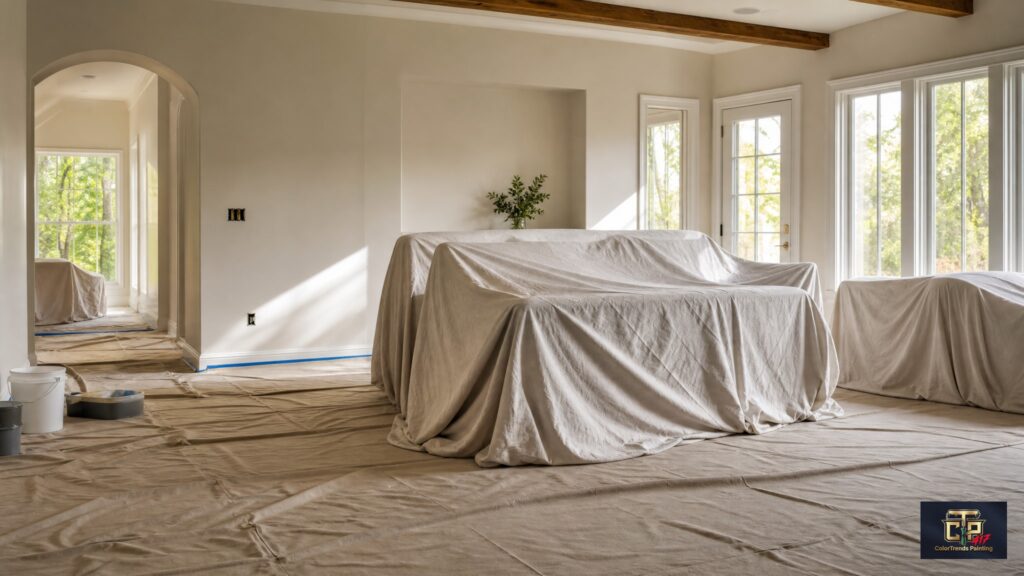
In Nixa homes with open floor plans, clear at least four feet of floor space around the walls. That’s what it takes for safe ladder placement and efficient spray application. Move smaller items like side tables, floor lamps, and accent chairs to another room or the garage. For sofas or entertainment centers too big to move, push them to the center of the room and group them together to open up the perimeter. That clustering gives painters the clearance they need and keeps your heavy furniture out of the splatter zone.
Handling Window Treatments and Wall Decor
Take down curtains, blinds, rods, and wall hangings before the crew walks in. Do it yourself and you avoid any risk of damage to antique hardware or delicate fabric during removal. Leave nails or anchors in place if you’re rehanging things in the same spot, but fill any holes you won’t reuse so the new paint lays smooth. It’s a small step, but it saves real time and means your window treatments go back up without a hitch once the paint’s cured.
Wall Preparation Tasks Homeowners Should Complete First
Clean surfaces aren’t optional if you want a durable finish, especially in high-traffic areas or kitchens where grease builds up where you can’t see it. Wipe down baseboards, door frames, and walls with a mild degreaser or TSP substitute to clear the film that causes paint to fail. ColorTrends handles the major repairs, but flagging problem spots early makes for a smoother estimate and scheduling process, with no surprises once work starts.
Cleaning Surfaces and Removing Hardware
Washing walls is a step a lot of homeowners skip, but it matters for paint performance in our local climate. Pay extra attention near light switches, stove tops, and handrails, where skin oils and grime build up over time. Pull off switch plates, outlet covers, and cabinet hardware, both for clean lines and so paint doesn’t seal these pieces to the wall. If you want the deeper technical rundown on this phase, our detailed wall prep guide covers the nuances of surface readiness.
Identifying Drywall Repairs Needed
Walk each room with a critical eye and look for cracks, nail pops, or water stains that need attention before priming. Small dings can look cosmetic, but they telegraph through fresh paint and take away from the finish you’re paying for. Minor spackling you can handle yourself. Structural cracks or heavy texture matching are better left to people who know drywall repair before painting in local housing stock. Point these spots out during the initial walkthrough, and they’ll be accounted for in the scope of work instead of surfacing mid-project.
Exterior Prep Specific to Missouri Weather and Homes
Exterior painting in the Ozarks means working around our regional climate and landscaping. Moisture management and physical access are the two things that shape how we approach outside projects differently than interior ones.
Landscaping and Outdoor Furniture Clearance
Trim back shrubs and tree branches so nothing touches or hangs within two feet of the house. That prevents moisture from getting trapped and gives crews full access to the siding. Move planters, patio furniture, and grills out of the work zone, both to protect them from overspray and to give crews safe footing. This clearance also helps our bleach-free soft wash process reach the siding effectively without harming your garden beds. Clearing the vegetation is part of what makes climate-ready exterior coatings hold up through Missouri’s weather cycles.
Access Points and Utility Considerations
Unlock all gates and get pets indoors or off-site so the crew can work safely and without interruption. Point out the outdoor electrical outlets and hose bibs painters will need, and clear any debris blocking them. If you have a dog run or invisible fence, tell the crew where the boundaries are so nobody gets hurt or lets the dog out by accident. These details seem small, but skipping them is what causes the costly delays.
Communicating Expectations With Your Painting Contractor
Clear communication before the first drop cloth goes down heads off misunderstandings that no amount of skilled labor can fix afterward. Talk through your color choices, sheen preferences, and any concerns about high-use areas during the consultation, not once the crew’s already started. Steve Binger personally reviews these details with every client, so expectations line up with craftsmanship standards and the final result matches what you had in mind. That’s the conversation that turns a transactional paint job into an actual partnership in improving your home.
This checklist doesn’t replace a professional estimate or skilled application, and it won’t guarantee perfection if there are underlying structural issues. It’s a foundation that lets quality work happen. It’s not a substitute for the trade expertise it takes to get a lasting finish on a Nixa property.
Day-of Arrival Checklist for a Smooth Painting Start
The morning the crew shows up sets the tone for the whole project, so a ready site eliminates friction right out of the gate. Confirm driveway or street parking is open and clear of your own vehicles, so there’s room for work trucks and trailers. Do a final sweep to make sure pets are secured and kids understand where the work zone boundaries are. Check that every access point you discussed is unlocked and the path to the work area is clear of tripping hazards. These small acts of hospitality respect the crew’s time, and they’re part of what makes for a zero-mess, professional job.
Post-Prep Questions to Ask Before Signing Off
Once your home is prepped and before painting starts, nail down cleanup responsibilities and warranty coverage so there’s no ambiguity later. Ask what protection measures will cover your floors and remaining furniture, and confirm the daily cleanup routine so you know what to expect each evening. ColorTrends Painting backs its work with 5-year warranties, because thorough prep is what makes a coating last years instead of months, and Steve stands behind that with owner-led accountability. Knowing those protections are in place is what lets you feel good about the investment. When you’re ready to work with a team that takes prep as seriously as application, check out our Nixa painting services to schedule a consultation.