
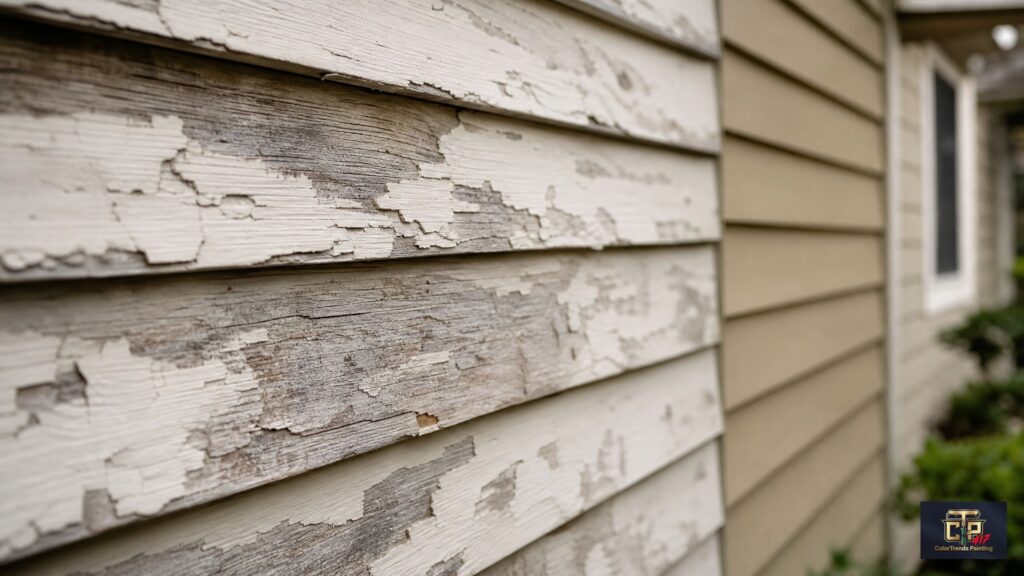
Steve Binger of ColorTrends Painting, Springfield’s most trusted local painting contractor with over 30 years of hands-on experience, says wood siding in the Ozarks typically needs repainting every 5-7 years. Regional moisture cycles are the reason why. How often to repaint your house in Missouri depends less on a fixed calendar and more on what’s actually on your walls, and on the microclimate of your particular neighborhood. National averages talk about a decade-long lifespan for exterior coatings. Our local conditions call for something more vigilant, because the damage that matters happens beneath the surface, not on top of it.
Southwest Missouri Repainting Timelines by Material
What’s under the paint sets the real maintenance schedule. Porous materials soak up moisture at rates that rigid surfaces just don’t match, so you can’t run one timeline across every feature of a house without risking early failure on one side and wasted money on the other.
Wood Siding and Trim Expectations
Wood is the most vulnerable exterior surface we run into around Springfield and Nixa, because it expands and contracts hard with the seasons. Steve puts it plainly: material type sets the baseline schedule more than the calendar does, and wood specifically wants attention every five to seven years to keep its protective barrier intact. That interval assumes the previous job was prepped right and used a quality acrylic or urethane coating.
Here’s what that looks like in practice. Homes in Nixa and Ozark with original builder-grade paint often show caulk failure within 3-5 years, because the initial prep wasn’t enough. Professionally prepped surfaces routinely go 8-10 years instead. If you own an older home with original cedar lap siding or a lot of wood trim around the windows and eaves, check those spots every year rather than waiting for peeling to show up.
Vinyl, Brick, and Stucco Durability
Non-porous cladding buys you a lot more time between full repaints, since it resists moisture and gives elastomeric or masonry coatings a stable base to sit on. Vinyl siding and brick veneer can often go ten years or more, as long as the caulking at joints and penetrations gets periodic attention. The paint itself can stay sound long after the sealant has dried out and cracked. That’s exactly why trim and joint maintenance matters more than how old the wall coating is.
Stucco is its own animal. It’s durable, but hairline cracks let water in behind the surface, and that water blisters paint from the back rather than wearing it down from the front. Catching those cracks during routine inspections saves you from a full stucco remediation job down the road.
How Ozark Weather Accelerates Exterior Paint Failure
Southwest Missouri averages over 40 inches of rain a year, and summer humidity regularly climbs past 70%. That combination pushes paint film degradation faster than what you’d see in a lot of the country. Your coatings are dealing with stress a manufacturer’s lab test never really replicates.
Humidity and UV Exposure Cycles
High moisture paired with strong UV creates a rough cycle: paint film swells on humid nights and shrinks under the afternoon sun. That constant back-and-forth wears out the binder resins holding the pigment together, and you get chalking and lost adhesion sooner than you’d expect. Darker colors soak up more heat and expand more, which is part of why deep blues and charcoal grays give out before the lighter tans and whites do around here.
South-facing walls tend to break down noticeably faster than north-facing ones. They’re taking both direct UV and the worst of the afternoon heat. That pattern alone tells you sun exposure is doing as much damage as the moisture.
Seasonal Temperature Swings
A hard freeze after a mild fall day puts real stress on paint, pushing it past what it can flex and recover from. When the temperature drops below freezing while the substrate is still holding moisture, ice forms underneath the film and breaks the bond mechanically. Then spring thaw sends liquid water into those fresh micro-cracks, and delamination starts before you’d ever notice a problem on the surface.
That’s the freeze-thaw cycle, and it’s why paint put on in late fall often fails early even though it looked fine through the winter. It never got the chance to fully cure before the cold shut down the chemical cross-linking that gives paint its long-term durability.
Visual Signs Your Exterior Needs Repainting Now
Telling a cosmetic issue from a structural coating failure saves you money, and it keeps rot out of the framing underneath. Wait until the paint’s peeling badly and you’ve let bare wood sit exposed for months, which primer alone can’t fully undo.
Chalking, Fading, and Mildew Growth
Rub a painted wall and if a powdery residue comes off on your hand, that’s chalking, and it means UV has broken down the resin binder holding the pigment. A little chalking is normal aging and cleaning handles it fine. Heavy chalking that stains clothing or runs down the wall in the rain is a different story; that’s end-of-life coating failure. Fading by itself isn’t necessarily urgent if the film’s still flexible and well-adhered, though it does mean less UV protection for whatever’s underneath.
Mildew growth points to moisture retention, not paint failure, but left alone it will eventually work its way into the coating. ColorTrends Painting’s bleach-free soft wash process is built specifically for southwest Missouri exteriors, pulling mildew off without damaging the paint film or the landscaping around it. That’s the right first move before you assume you need a full repaint.
Caulk Failure and Wood Rot Indicators
Caulk failure at window perimeters, corner boards, and trim intersections is the warning sign to take most seriously, because it opens a direct path for bulk water into the wall cavity. Steve notes that catching caulk failure early is what prevents the costly wood rot repairs common in older Springfield homes, where the original construction just didn’t have modern flashing built in. Soft or spongy wood around nail heads, swollen trim boards, dark staining at the joints, all of that means active moisture intrusion, and paint isn’t going to fix it.
Alligatoring is the pattern of interconnected cracks that looks like reptile skin. It means the paint film has lost its elasticity entirely and can no longer move with the substrate. At that point you need to strip back to bare wood, because new paint over an alligatored surface will crack the same way within months.
Preparation and Product Choices That Extend Paint Life
Prep work matters more than premium paint. No coating, no matter the price tag or the warranty, bonds well to a surface that’s dirty, glossy, or structurally compromised. In our region, where biological growth and chalky residue are working against you daily, thorough cleaning and priming aren’t optional.
Proper Surface Prep for Humid Climates
Pressure washing alone rarely gets out embedded mildew roots or oxidized chalk, and both of those block new paint from bonding to the old surface. Real preparation means scraping loose material, sanding feather edges smooth, treating mildew with the right biocides, and priming bare spots with a stain-blocker before the topcoat goes on. Take a look at our homeowner prep checklist so you know what proper prep actually involves before you accept any contractor’s bid.
A moisture meter tells you whether the substrate has actually dried out after cleaning or rain, which matters because trapped vapor blisters fresh paint within weeks if you skip that check. Skipping it is the single most common cause of callback failures we see across the Ozarks.
Selecting Moisture-Resistant Coatings
Breathable elastomeric or urethane-acrylic coatings handle Missouri’s moisture load better than the generic big-box paints, because they let water vapor pass through while still blocking liquid water. They flex with the substrate instead of cracking under thermal stress, which adds real years to the coating’s life in a climate this volatile. Sheen matters too, flat finishes trap dirt and mildew spores, while satin or low-luster sheens shed contaminants better when it rains.
If you’re thinking about a color change while you’re at it, our page on exterior paint colors trending in Ozark can help make sure the look you want also holds up to local conditions.
Maintenance Habits to Maximize Years Between Repaints
A yearly walk-around from ground level catches problems while they’re still small, before they turn into jobs that need scaffolding or real carpentry. Walk the property each spring once pollen season clears, and again in late fall before winter sets in. Take photos so you can track how things change over time.
Gentle, low-pressure cleaning preserves the paint while it clears off the biological growth that speeds up degradation if it’s left alone season after season. Our bleach-free soft wash process gets rid of algae, mold, and organic staining without forcing water behind the siding or stripping the coating the way aggressive pressure washing can. Keep up that habit and you’ll typically add two to three years to your repaint cycle compared to skipping exterior cleaning altogether.
Trim vegetation back from the walls. It improves airflow and cuts down on the shade-driven moisture that feeds biological growth on north-facing walls especially. Keep six inches of clearance between the soil and the bottom of your siding, and you handle splash-back staining and termite access at the same time.
When to Call a Professional vs. DIY Exterior Refresh
Multi-story Ozark homes bring fall hazards and reach problems that call for professional equipment and training if you want the job done safely. The technical side, moisture management, substrate repair, picking the right product, goes past what most weekend projects can handle once you’re dealing with aged or previously failed coatings.
ColorTrends’ owner-led model puts 30+ years of trade experience directly on your jobsite, so decisions come from real-world work rather than a manufacturer’s data sheet. Our page on questions to ask before hiring helps you tell apart the contractors who actually understand southwest Missouri conditions from the ones running a generic playbook. If you’d rather tackle a simpler project yourself, our We Help U PAINT coaching service gives you guidance suited to your specific situation and skill level.
DIY makes the most sense for single-story accent walls, fence sections, or interior refreshes, where a mistake doesn’t cost you much and the learning curve stays manageable. Try a full exterior repaint on a complex house without experience, and it usually ends up costing more in rework than hiring a professional would have from the start.
Planning Your Next Exterior Project in 2027
The good painting window in southwest Missouri usually runs from late spring through early fall, once temperatures settle in the 50-to-85-degree range. Book your estimate early in 2027 and you get ahead of peak summer demand across Springfield and the surrounding towns, which gives you room to pick timing that actually works for your household.
Planning early also leaves time for color consultations, ordering product, and any carpentry repairs that need to happen before painting starts. Rush those steps and you end up compressing the timeline, which forces compromises on quality or on waiting for the right weather, either of which shortens how long the finished job lasts.
Contact Steve Binger at ColorTrends Painting for a no-pressure exterior assessment. He’ll look at your specific materials, exposure, and current coating condition and give you an accurate repainting timeline. Knowing exactly when your home needs attention lets you budget for it instead of getting hit with an emergency repair from maintenance you put off too long.